
Everyone talks about "the funnel."
Marketing Twitter loves it. LinkedIn gurus worship it. Every SaaS landing page has a diagram of one.
But here is the truth most people won't tell you: the traditional marketing funnel is a lie.
Not because funnels don't work. They do. But because the way most brands build them is fundamentally broken.
The funnel is not a template you copy. It is a system you engineer. And most people confuse the two.
I have spent years watching brands dump money into "awareness" campaigns with zero measurement. Watching them obsess over top-of-funnel vanity metrics while their actual conversion pipeline leaks like a sieve.
This post is the corrective. A complete, data-backed breakdown of how marketing funnels actually work in 2026. Not theory. Not textbook definitions. The real mechanics.
The Funnel Is Over 100 Years Old. It Still Works.
In 1898, Elias St. Elmo Lewis created a model called AIDA: Awareness, Interest, Desire, Action.
That was 128 years ago.
The fact that we still use this framework tells you something important: human psychology doesn't change. Platforms change. Algorithms change. The way people make decisions? That is remarkably stable.
The modern marketing funnel has evolved from AIDA into four primary stages:
Simple in theory. Brutal in execution.
Most brands nail exactly one of these stages and completely ignore the rest. They are either great at getting eyeballs (awareness) or great at closing deals (conversion). Almost nobody builds the full system.
Why Your Funnel Is Leaking (And You Don't Even Know It)
Here is a stat that should terrify you.
Only 3-5% of your market is actively ready to buy at any given time.
That means 95% of the people seeing your ads, reading your content, and visiting your website are not ready to purchase. If your entire strategy is built around bottom-of-funnel conversion, you are ignoring 95% of your potential revenue.
Deep Dive: The Convergence Problem
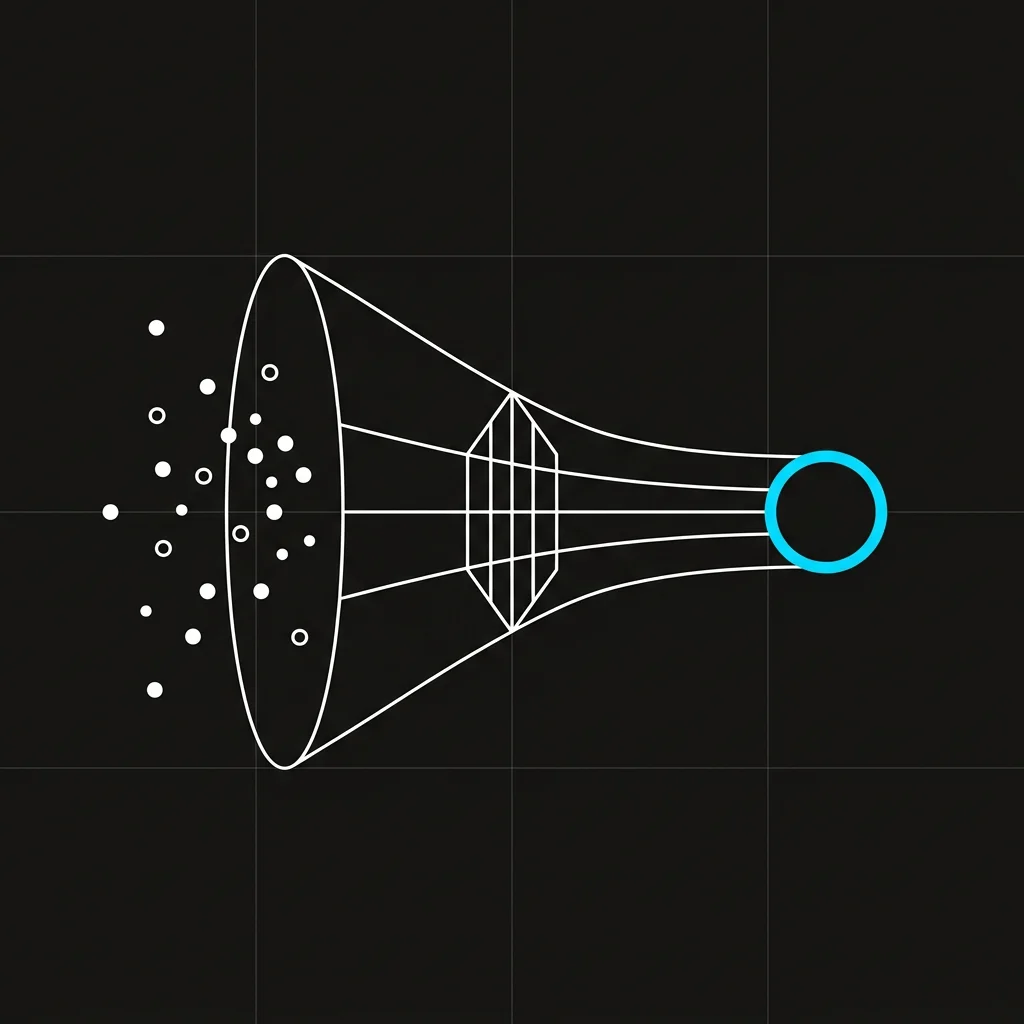
Think of your funnel as a physical filter. Thousands of inputs enter from the left. Your job is to guide the right ones through to the single output on the right.
The problem? Most brands build the filter wrong. They cast a wide net at the top but have no mechanism to nurture, qualify, or re-engage the 95% who aren't ready yet.
Companies that excel at lead nurturing generate 50% more sales-ready leads at 33% lower cost, according to Forrester Research. The nurturing stage is where money is made. Not the awareness stage.
This is why full-funnel thinking matters. You cannot just optimize one stage and expect results. Every stage feeds the next.
Stage 1: Awareness. Stop Chasing Impressions.
Awareness is not about getting your name in front of as many people as possible.
That is the amateur version.
Real awareness is about becoming the default answer to a specific question in someone's mind.
When someone in your market has a problem, do they think of you first? If not, your awareness strategy is failing regardless of how many impressions you are buying.
Here is what actually works at the awareness stage:
- Educational content that solves a real problem. Not brand videos. Not "about us" pages. Content that makes someone's life measurably better in 5 minutes.
- SEO-driven organic traffic. People actively searching for solutions are the highest-intent awareness leads you will ever find.
- Strategic social proof. Guest posts, podcast appearances, and partnerships that put you in front of someone else's trusted audience.
The metric that matters here is not impressions or reach. It is branded search volume. If people are typing your name into Google, your awareness strategy is working. If they are not, you are just renting attention.
Stage 2: Consideration. This Is Where You Win Or Lose.
Most brands skip this stage entirely.
They go from "look at us" straight to "buy now." And then they wonder why their conversion rate is 0.5%.
Consideration is the stage where trust is built. And trust is the only currency that converts.
At this stage, your prospect knows they have a problem. They know solutions exist. They are comparing options. Your job is to make the comparison effortless.
Here is what works:
- Comparison content. "Us vs. Competitor X" pages convert at insanely high rates because they intercept people at the exact moment of decision.
- Case studies with specific numbers. Not "we helped Company X grow." Instead: "We helped Company X increase Instagram engagement by 184% in 90 days." Specificity builds trust.
- Free tools and calculators. Give people a taste of the value before they pay. This is the single most underused consideration tactic in marketing.
Stage 3: Conversion. Make It Stupid Simple.
If someone has made it this far, they want to buy.
Your only job is to not screw it up.
And yet. Most brands find creative ways to add friction at the exact moment when the prospect is ready to hand over money. Long forms. Confusing pricing pages. Required phone numbers for a digital product.
Every unnecessary step between "I want this" and "I have this" is costing you revenue.
The conversion stage comes down to three things:
Can someone understand your pricing in 10 seconds?
Can they complete the purchase in under 2 minutes?
Do they feel safe? Guarantees, proof, and security badges matter.
According to Semrush's research, even small conversion rate improvements at this stage have outsized effects because you have already paid the acquisition cost. A 1% improvement in conversion rate on a $100K monthly ad spend is $1,000 of pure profit. Every month. Compounding.
Stage 4: Loyalty. The Most Profitable Stage Nobody Optimizes.
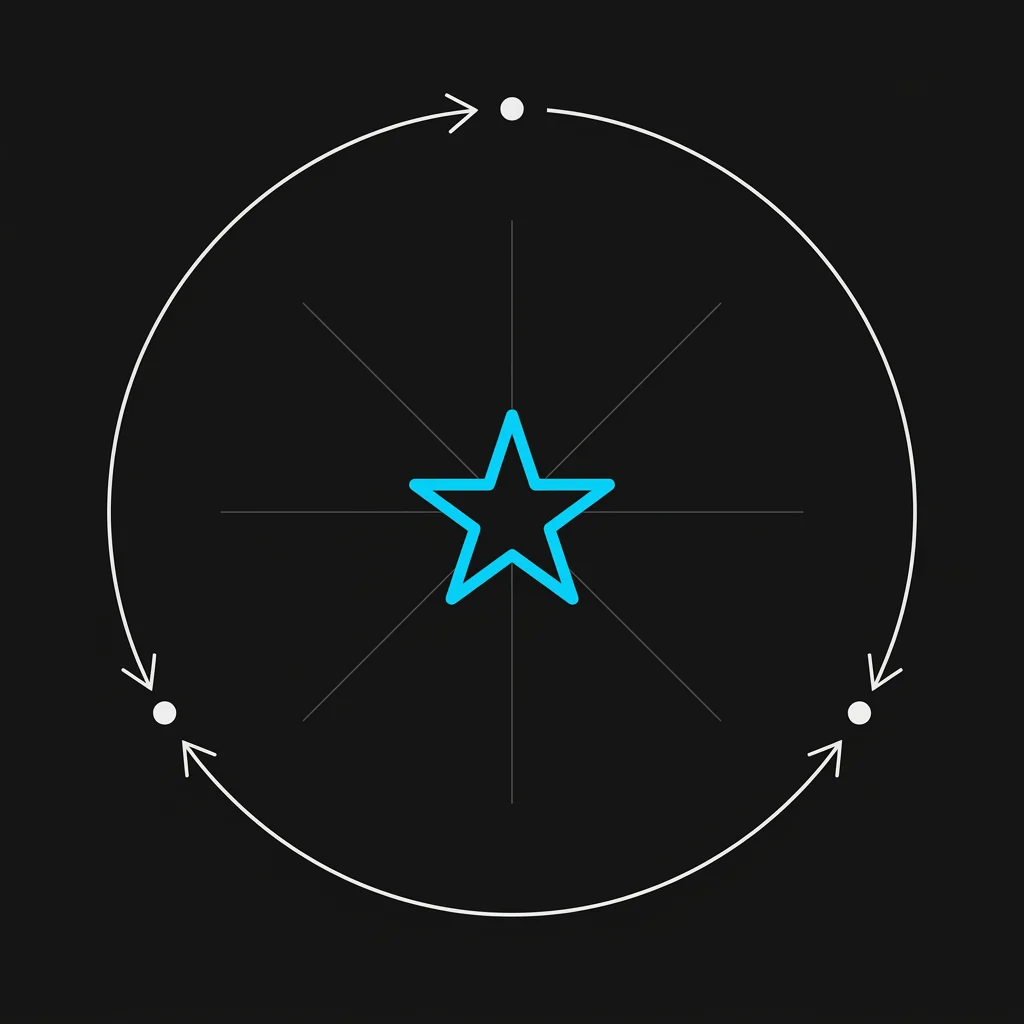
Acquiring a new customer costs 5-7x more than retaining an existing one.
Everyone knows this stat. Almost nobody acts on it.
The loyalty stage is where your funnel stops being a funnel and becomes a flywheel. Happy customers refer new customers. Referrals convert at higher rates. Higher conversion rates mean more happy customers.
This is the compounding machine that separates brands that scale from brands that stall.
What drives loyalty?
- Unexpected value delivery. Give customers something they didn't pay for. A bonus feature. A free audit. The surprise element creates emotional attachment that no discount can match.
- Community. People don't stay loyal to products. They stay loyal to tribes. Build a space where your customers interact with each other.
- Feedback loops. Ask for feedback and then visibly act on it. Nothing builds loyalty faster than a customer seeing their suggestion become a feature.
Your best marketing channel is not Instagram or Google Ads. It is your existing customers telling other people about you.
The Modern Funnel Is Not Linear (And That Changes Everything)
Here is what the textbooks get wrong.
They draw the funnel as a straight line: awareness to consideration to conversion to loyalty. Clean. Sequential. Predictable.
Real customer journeys look nothing like this.
A prospect discovers you on Instagram, forgets about you for three months, sees a LinkedIn post, reads a blog article, asks a friend, visits your website, leaves, comes back two weeks later, and then buys.
HubSpot's research confirms it: the digital path to purchase is fundamentally non-linear. Consumers enter and exit the funnel at different stages. They skip stages. They loop back. They research on one device and purchase on another three days later.
This is why attribution is so hard. And why single-touch attribution models are basically useless for understanding funnel performance. The customer who converts after clicking your Google ad probably saw your brand six times before that click. The ad gets the credit. The other five touchpoints did the actual work.
The brands that win in 2026 are the ones that stop thinking of the funnel as a pipeline and start thinking of it as an ecosystem. Every piece of content, every ad, every email plays a role. The question is not "which channel drove the conversion." The question is "which combination of touchpoints created the conditions for conversion to happen."
This means your funnel strategy needs to be omnipresent, not sequential. You need to show up at every stage simultaneously because you never know which stage a given prospect is in at any given moment.
How To Actually Build Your Funnel (A Practical Framework)
Enough theory. Here is the step-by-step framework I use.
Where are your leads actually coming from? Use analytics to track the real path, not the assumed path. Most brands are shocked to discover their "awareness" channel is actually driving direct conversions.
Look at the stage-to-stage drop-off rates. Where are you losing the most people? That is where you invest first. Not at the top. Not at the bottom. At the biggest leak.
You don't need a content empire. One killer awareness article. One consideration comparison page. One conversion landing page. One loyalty email sequence. That is your MVP funnel.
Awareness: branded search volume. Consideration: return visit rate. Conversion: close rate by channel. Loyalty: NPS and referral rate. If you are tracking vanity metrics at any stage, you are flying blind.
The handoff between stages is where most funnels break. Use email sequences, retargeting, and behavioral triggers to automatically move people from one stage to the next.
Common Funnel Mistakes That Drain Your Budget
Let me be direct about what I see brands do wrong every single day.
Treating all traffic the same. A visitor from a Google search for "best Instagram analytics tool" is in a completely different mental state than someone who saw your ad while scrolling TikTok. Your messaging should reflect that.
Measuring the wrong things at each stage. Impressions at the awareness stage are fine. Impressions at the conversion stage are a red flag. If you are reporting the same metrics across all four stages, you are hiding problems behind vanity numbers.
No retargeting strategy. Someone visited your pricing page and left. That is not a lost lead. That is a warm prospect who needs one more touchpoint. Brands without retargeting are leaving their most qualified leads on the table.
Ignoring post-purchase completely. The moment someone buys is the moment they are most emotionally invested in your brand. That is when you send the welcome sequence. Not two weeks later. Right now.
Build Your Funnel With Data, Not Guesswork
You cannot build an effective funnel without understanding your audience deeply. AnalyzeInsta gives you the competitor insights, engagement data, and audience analytics to engineer each stage with precision.
Try AnalyzeInsta FreeThe Bottom Line
The marketing funnel is not dead. It is not outdated. It is not irrelevant.
It is misunderstood.
Most brands treat the funnel as a diagram to put in a pitch deck. The brands that win treat it as an operating system for revenue.
Build every stage. Measure every transition. Fix every leak. And remember: the funnel is not about pushing people toward a sale. It is about removing every obstacle between a qualified prospect and the solution they already want.
That is the difference between marketing that works and marketing that looks like it works.
Written by Julian Vivaan. CEO, AnalyzeInsta.