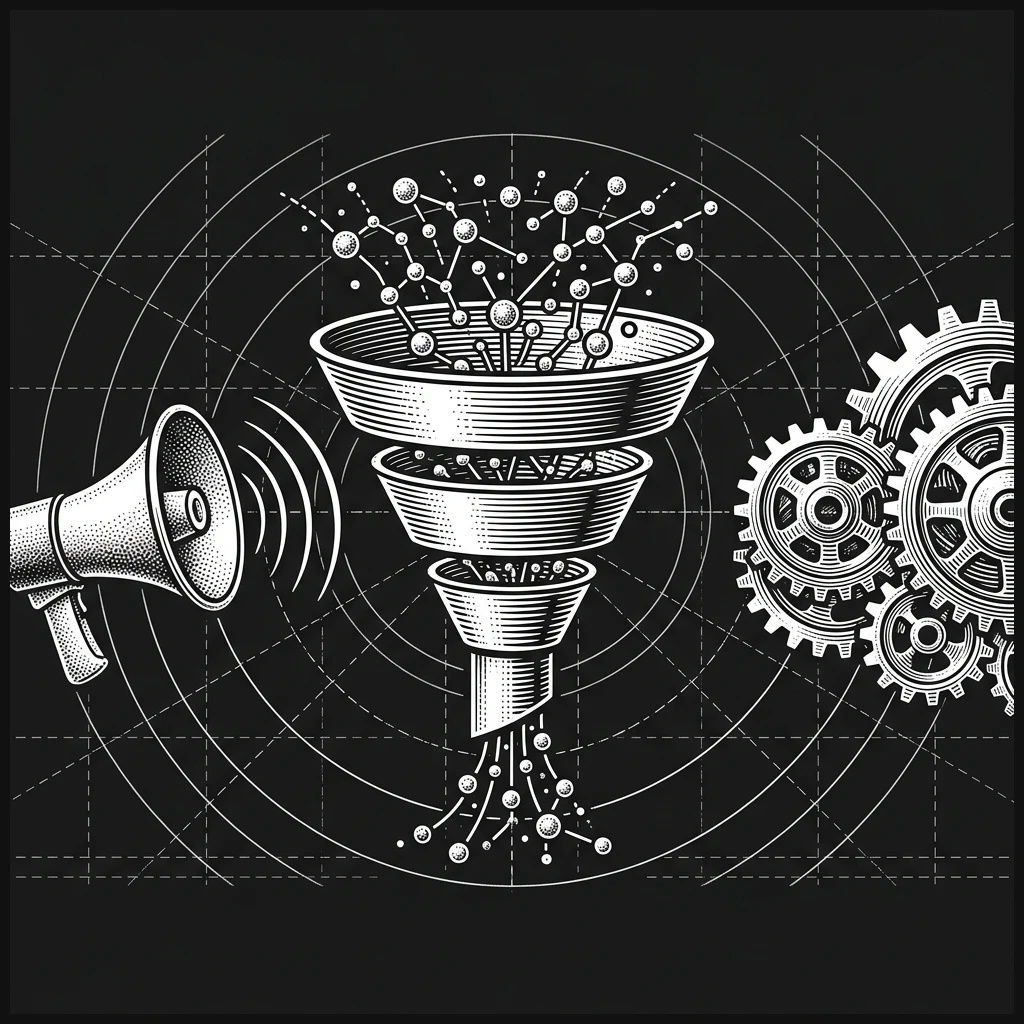
Most brand directors treat their marketing budgets like throwaway capital in a casino. They deploy advertisements with zero structural framing, hoping the digital algorithm yields positive conversion numbers. This is a fatal strategic mistake.
Without a defined customer progression model, you are wasting valuable ad spend. The digital path to purchase is highly non-linear, meaning customers enter, exit, and loop around your ecosystem continuously. You must build a systematic, multi-tiered framework to capture attention, build trust, and convert visitors into advocates.
This is the marketing funnel. It is not a suggestion for growth. It is the absolute operational architecture of every high-performing business on the planet.
THE MULTI-BILLION DOLLAR LEAKAGE
Brands are currently losing an estimated $1.3 billion annually to fake influencer engagement, bloated bot traffic, and fragmented digital targeting. Standardizing a full-funnel approach is the only way to recover this waste.
The Structural Decline of Organic Attention
Organic reach on mature visual channels is undergoing a structural collapse. Benchmarks indicate that overall organic engagement rates have fallen significantly over the past three years. Visual platforms now yield a meager average engagement rate of 0.98 percent, which represents a 16 percent drop since 2023.
You cannot rely on simple, uncoordinated organic posts. Attention is too scarce. The landscape is saturated with competing noise, and video-first algorithms continuously fragment user behavior.
To survive this paradigm shift, your brand must transition from speculative outbound campaigns to structured, multi-tier inbound architectures. A full-funnel approach resolves this friction. Integrated analytics demonstrate that brands utilizing unified full-funnel marketing strategies experience up to three times more brand awareness, twice the amount of consideration, and two times more purchases compared to single-channel operators.
When you align your top-of-funnel reach with bottom-of-funnel conversion systems, you build an asset that grows in efficiency over time. You stop paying for empty clicks and start investing in predictable consumer behaviors. This is how you build a scalable conversion engine that prints enterprise value.
The Four Stages of the Modern Funnel
The progression from stranger to lifelong customer requires four distinct operational phases. You must manage and optimize each of these stages to secure predictable, scalable revenue growth. Skip a single tier, and your entire conversion mechanism breaks down, diluting your capital and inflating your acquisition costs.
Awareness: Capturing Scarce Cognitive Real Estate
You must cast a wide net to capture high-intent audiences. Introduce your brand culture, core value proposition, and visual identity to prospects who are actively seeking answers to their specific pain points.
Consideration: Vetting the Solution
At this level, the lead is actively researching options and comparing your specifications against competitor offerings. Your objective is to educate them, resolve technical objections, and prove your authority.
Conversion: Securing the Transaction
The prospect believes you possess the correct solution to their problem. You must now eliminate transaction friction, display clear pricing matrices, and provide a secure purchase mechanism to drive final execution.
Loyalty: Nurturing Brand Advocates
Acquisition is highly expensive. Fostering post-purchase customer relationships through automated email flows and loyalty programs ensures repeat purchases and builds genuine word-of-mouth advocacy.
Stage 1: Awareness (Top of Funnel: TOFU)
The awareness stage is where prospects first establish cognitive contact with your business. You must deploy highly visible SEO-driven content, targeted paid advertisements, and strategic creator partnerships to maximize reach. If your top-of-funnel strategy is weak, your entire brand remains invisible to the market.
Studies reveal that **84 percent of shoppers** begin their online product searches on third-party digital channels rather than a brand's owned website. This makes off-site presence the single most critical factor in capturing top-of-funnel traffic. You must distribute your messaging to the precise coordinates where your ideal customer spends their digital attention.
To successfully capture this audience, you must deliver clear, surface-level value. Your marketing assets should act as an open broadcast, signaling your core expertise and cultural relevance to the market. You are announcing your existence to a crowded room, and your voice must be distinct, authoritative, and immediately recognizable.

Do not attempt to sell your product immediately at this stage. That is a premature strategic maneuver that destroys potential relationships. Focus entirely on establishing authority, building visual familiarity, and answering the basic diagnostic questions your audience is asking daily.
We see high-performing brands deploy deep, educational resource guides and native social essays at this level. These assets require zero purchase commitment, allowing the user to experience your expertise with zero friction. Over time, this passive consumption builds a massive pool of warm, brand-aware traffic ready to transition down the funnel.
Stage 2: Consideration (Middle of Funnel: MOFU)
Once a prospect interacts with your top-of-funnel assets, they transition into a qualified lead. They are now actively considering solutions and comparing your specific metrics against competitors. They understand their problem, and they are seeking the single most efficient tool to resolve it.
During the consideration phase, you must provide deep educational resources, case studies, and interactive tool snapshots. This is where you outline exactly how your system solves their operational pain points. You must prove your tactical superiority and clear their technical objections with undeniable, fact-checked data.
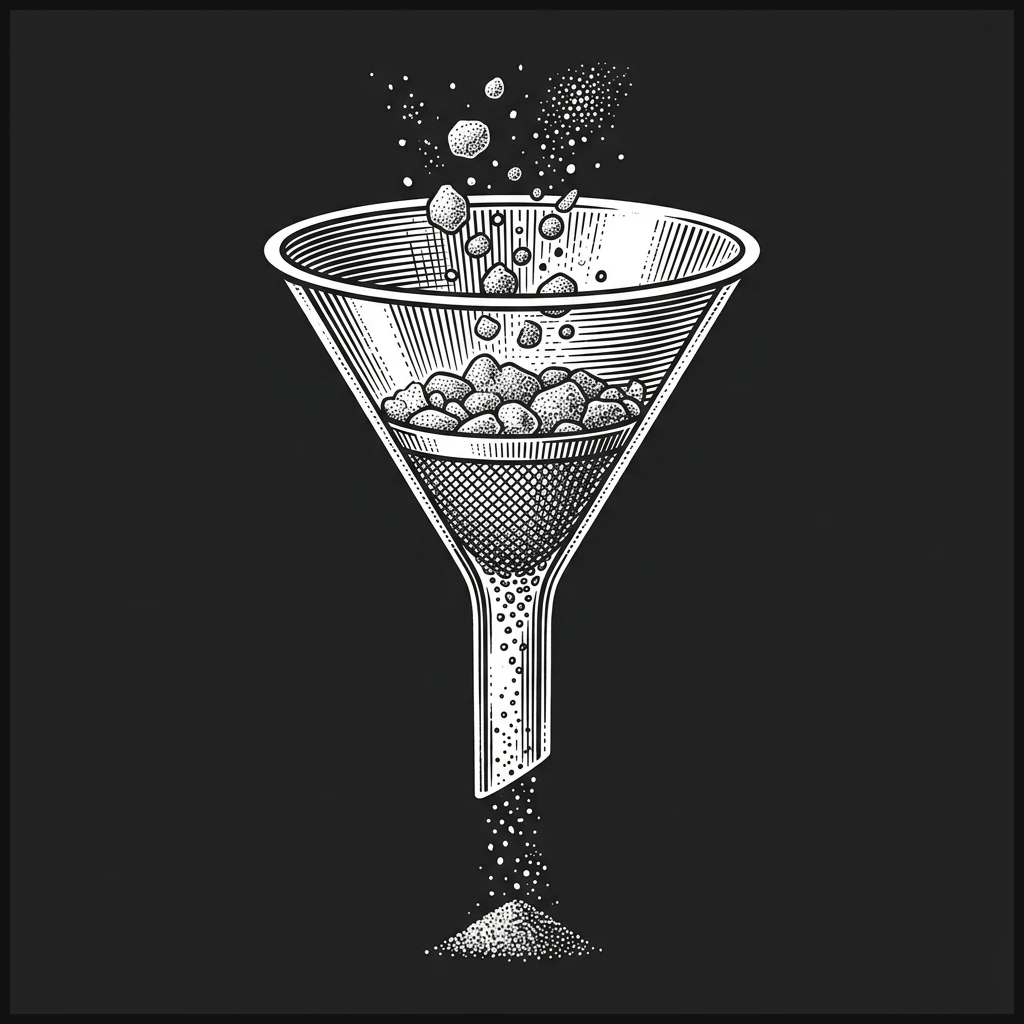
A structured consideration framework acts as a digital filter. It weeds out low-intent curiosity clicks and guides serious prospects into your conversion engine by establishing unmatched credibility. The middle of the funnel is where trust is either solidified or permanently lost.
Address specific objections directly. Highlight your distinct operational features, detail your engineering superiority, and display verified customer case studies to prove your absolute market dominance. You must show the prospect the exact mechanics of their future success under your guidance.
Use comparison grids that contrast your features against standard industry offerings. Provide free webinars that demonstrate your product in action, and offer interactive calculators that let the prospect input their own numbers. When they see the exact ROI your tool delivers, their path to conversion becomes clear and logical.
Stage 3: Conversion (Bottom of Funnel: BOFU)
The conversion stage is the final step in the initial customer acquisition cycle. The prospect possesses high intent and is prepared to buy, but they require final reassurance and seamless checkout infrastructure. The slightest mechanical friction at this level will send them retreating to a competitor.
You must eliminate all technical friction. Ensure your landing pages load instantly, clarify your checkout steps, and secure the transaction with trusted payment architectures. A single extra form field or slow-loading script can cost you thousands in lost revenue.
Think of conversion as a high-precision mechanical gear. Every operational component must interlock seamlessly to execute the transaction and convert cognitive interest into verified cash flow. The purchase page must be optimized to guide the customer across the finish line with absolute confidence.

Leverage conversion optimization techniques such as immediate post-purchase onboarding, clear satisfaction guarantees, and highly visible FAQs to solidify purchase confidence. Show them that you have removed all risk from their decision, making the transaction a complete logical necessity.
Provide multiple secure payment methods and display verified security badges directly on the checkout form. Keep the copy focused strictly on action: use clear buttons, concise directions, and reassuring guarantees. Once the transaction completes, instantly redirect them to a high-value welcome portal to kickstart their customer lifecycle.
Stage 4: Loyalty (The Engagement Engine)
Acquiring a new customer costs **five times more** than retaining an existing one. Treating a conversion as the end of the customer relationship is a critical financial error. The true value of a customer is realized in their lifetime retention rate and their willingness to advocate for your brand.
Post-purchase engagement turns single buyers into brand advocates. You must deploy automated onboarding flows, premium customer support, and strategic loyalty rewards to nurture long-term partnerships. Show them that their purchase was the entry point to an elite, highly supportive ecosystem.
Advocacy is the ultimate leverage. A loyal customer who actively recommends your platform is a free, high-conversion organic distribution channel that scales your business exponentially. They write your positive reviews, defend your brand online, and refer new high-value leads directly into your top-of-funnel Megaphone.
Design premium newsletter sequences reserved exclusively for active customers. Offer early access to new feature releases, and reward their continuous loyalty with custom discounts. When your customers feel valued and supported after they pay, they remain connected to your ecosystem forever.
Full-Funnel Metrics and Measurement Matrix
You cannot manage what you do not measure. A successful full-funnel strategy requires distinct key performance indicators (KPIs) at each level of the customer progression. Without granular data tracking, you are steering your marketing ship completely blind.
Top-of-funnel metrics focus entirely on broad reach and attention. Middle-of-funnel benchmarks track initial engagement quality, and bottom-of-funnel indicators measure direct transaction efficiency. By organizing these variables into a structured matrix, you can instantly identify where your conversion leaks are occurring.
| FUNNEL LEVEL | CORE PERFORMANCE METRIC | STRATEGIC TARGET OBJECTIVE |
|---|---|---|
| TOFU (Awareness) | Unique Reach & Click-Through Rate | Capture attention and maximize visibility |
| MOFU (Consideration) | Detail Page Views & Search Index | Vet leads and establish trust |
| BOFU (Conversion) | ROAS, Conversion Rate & CAC | Secure transactions and maximize profit |
Monitor these variables continuously. Identify where bottlenecks occur, optimize the target friction point, and scale the distribution channels that yield the highest customer lifetime value. If your click-through rate is high but conversions are low, your checkout mechanism requires immediate technical attention.
A highly optimized, integrated funnel is not a passive asset. It is an active cash-generation mechanism that turns cold traffic into predictable, high-value advocacy. When you engineer your marketing structure with this level of mathematical precision, you insulate your brand from algorithm volatility and competitor attacks.
BUILD A HIGH-CONVERTING CONVERSION ENGINE
AnalyzeInsta delivers the real-time social intelligence, competitor benchmarks, and engagement analytics you require to identify bottlenecks and optimize your funnel.
Try AnalyzeInsta FreeBuilding a successful marketing funnel is a long-term operational commitment. You must systematically refine your messaging, audit your metrics, and eliminate friction at every level to dominate your market. The landscape will continue to evolve, but the core human patterns of customer progression remain constant.
The reward is structural scalability. A highly optimized, data-driven funnel is the only asset that gives you the absolute freedom to acquire customers profitably at scale. It transforms marketing from a speculative gamble into a predictable science.
Begin building yours today.
Written by Julian Vivaan. CEO, AnalyzeInsta.